Unspoken expectations
Personal Patterns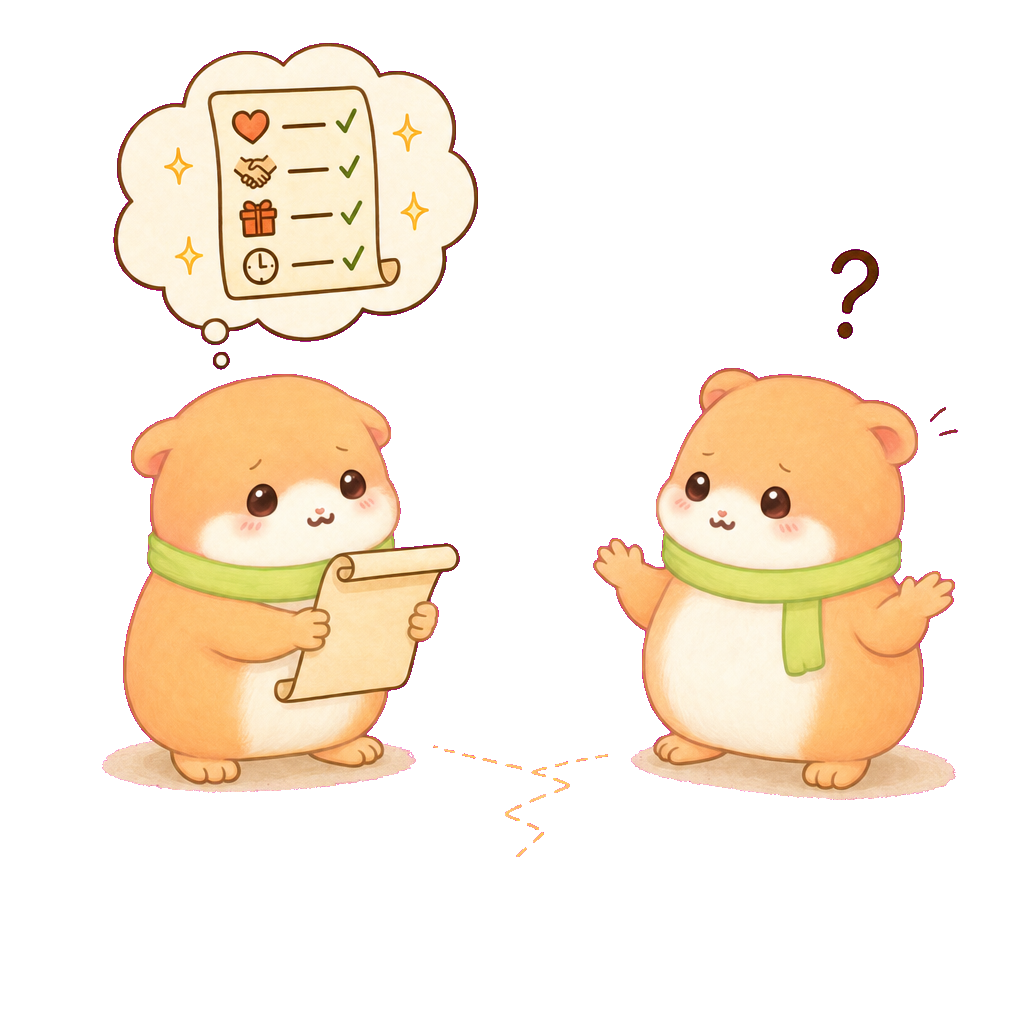
What is it?
Unspoken expectations happen when you hold someone to a need, rule, timeline, or standard that hasn’t been clearly stated. You may feel hurt because they didn’t check in, didn’t know what you wanted, didn’t offer help, didn’t celebrate something correctly, or didn’t respond the way you hoped. Sometimes the expectation may be reasonable, but if it was never communicated, the other person is being tested against a hidden standard. This pattern often creates disappointment because the person doesn’t just fail the request; they fail to guess the request.
How do people work on it?
Practice turning expectations into clear requests. Before deciding someone failed you, ask, “Did I actually tell them what I wanted, or did I hope they would know?” A direct request can still feel vulnerable, but it gives the relationship a real chance. Try: “It would mean a lot if you checked in after my appointment,” or “I’d like us to plan birthdays more intentionally.”
A useful exercise: use a hidden contract check. Write: I expected them to… Then ask: Did I communicate this clearly? Did they agree to it? Is this a preference, a need, or a boundary? This helps you separate valid needs from unspoken tests.
Additional resources to explore: DBT interpersonal effectiveness can be useful for making clear asks and negotiating needs. Couples therapy can help if both people have different assumptions about care, effort, communication, or responsibility.
Educational, not diagnostic.
Learn more