Social withdrawal
Personal Patterns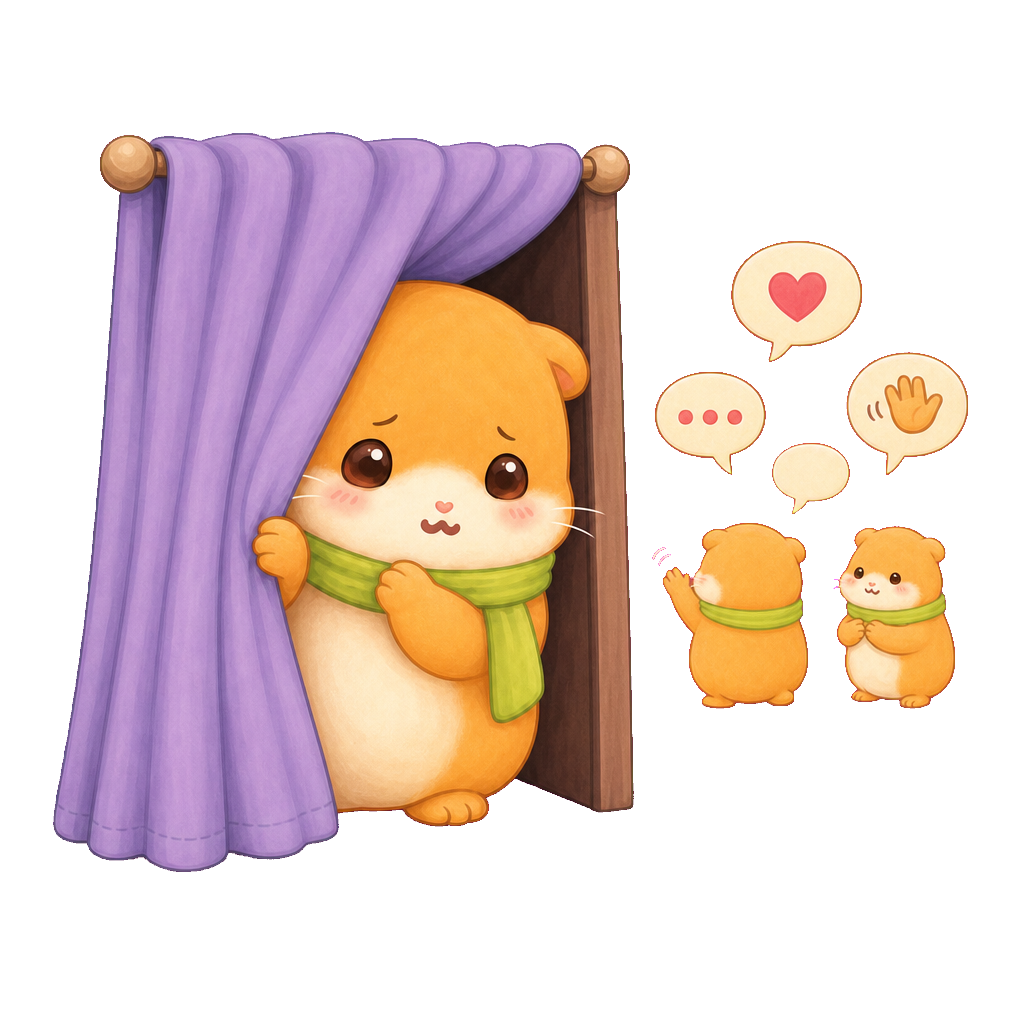
What is it?
Social withdrawal is when you pull back from people because connection feels like too much. It might feel safer to avoid texts, cancel plans, stop initiating, stay quiet in groups, or disappear when you’re ashamed, overwhelmed, low, or afraid of rejection. Solitude can be healthy, but withdrawal becomes a pattern when it reduces support and makes reconnecting feel harder. The longer you stay away, the more your mind may start telling you that people don’t care, that it’s too late, or that showing up would be awkward.
How do people work on it?
Start with low-pressure reconnection. Don’t force yourself into the hardest social situation first. Send one short text, react to a message, take a walk with someone safe, sit near people in a public place, or show up for 30 minutes instead of the whole event. The goal is to give your nervous system evidence that contact can be manageable.
A useful exercise: create a connection ladder. List social actions from easiest to hardest: liking a message, sending an emoji, texting “thinking of you,” asking one question, making a plan, attending a small gathering, initiating a harder conversation. Start with the lowest step and repeat it until it feels less loaded. NHS self-help guidance around facing fears similarly recommends breaking feared situations into smaller steps and rating them by difficulty.
Additional resources to explore: Behavioral activation can help when withdrawal is linked to depression, low motivation, or loss of reward. CBT can help with rejection predictions and mind-reading. Interpersonal therapy, group therapy, or attachment-informed therapy may be useful if isolation is long-standing or tied to shame, grief, or relational fear.
Educational, not diagnostic.
Learn more