Sequencing difficulty
Personal Patterns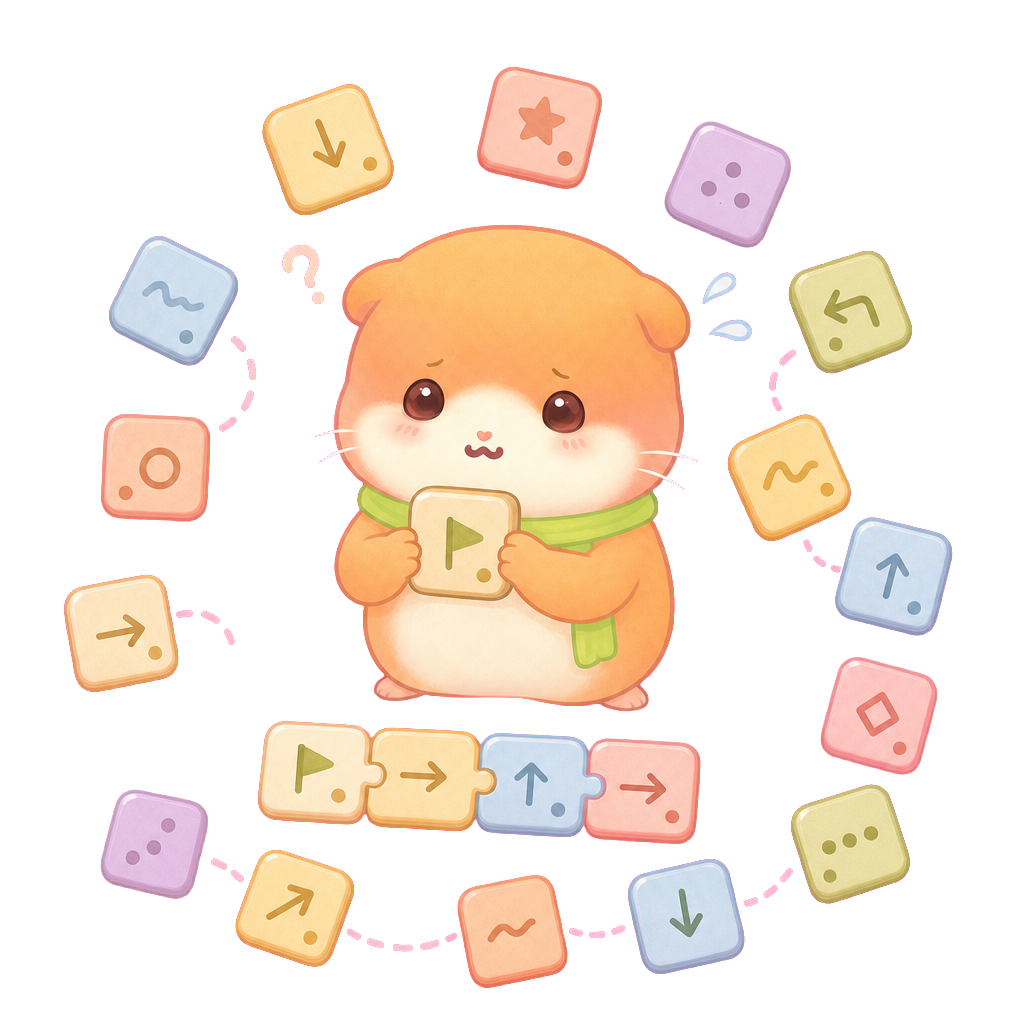
What is it?
Sequencing difficulty is when you know the goal but can’t easily see the order of operations. The task feels like a blob: too many parts, unclear dependencies, no obvious first step. This can make simple tasks feel strangely overwhelming because your brain is trying to hold the whole process at once. Sequencing is especially hard when tasks are vague, unfamiliar, emotionally charged, or require multiple systems: scheduling, communication, documents, decisions, and follow-through.
How do people work on it?
Externalize the sequence. Write every step out of order first, then put the steps in order after. Don’t try to make the perfect plan in your head. Ask, “What has to happen before this can happen?” and “What is the first step that unlocks the next step?” If you get stuck, ask someone else to help you identify the first three steps.
A useful exercise: use a reverse sequence. Start with the finished outcome and work backward. Example: “Submit application” requires “upload documents,” which requires “find documents,” which requires “check requirements.” Once you reverse it, the first action becomes clearer.
Additional resources to explore: ADHD coaching, occupational therapy-informed supports, CBT for organization/planning, and body doubling can help. Checklists, templates, and step-by-step routines are especially useful because they reduce the need to reconstruct the sequence from scratch every time.
Educational, not diagnostic.
Learn more