Replaying rejection
Personal Patterns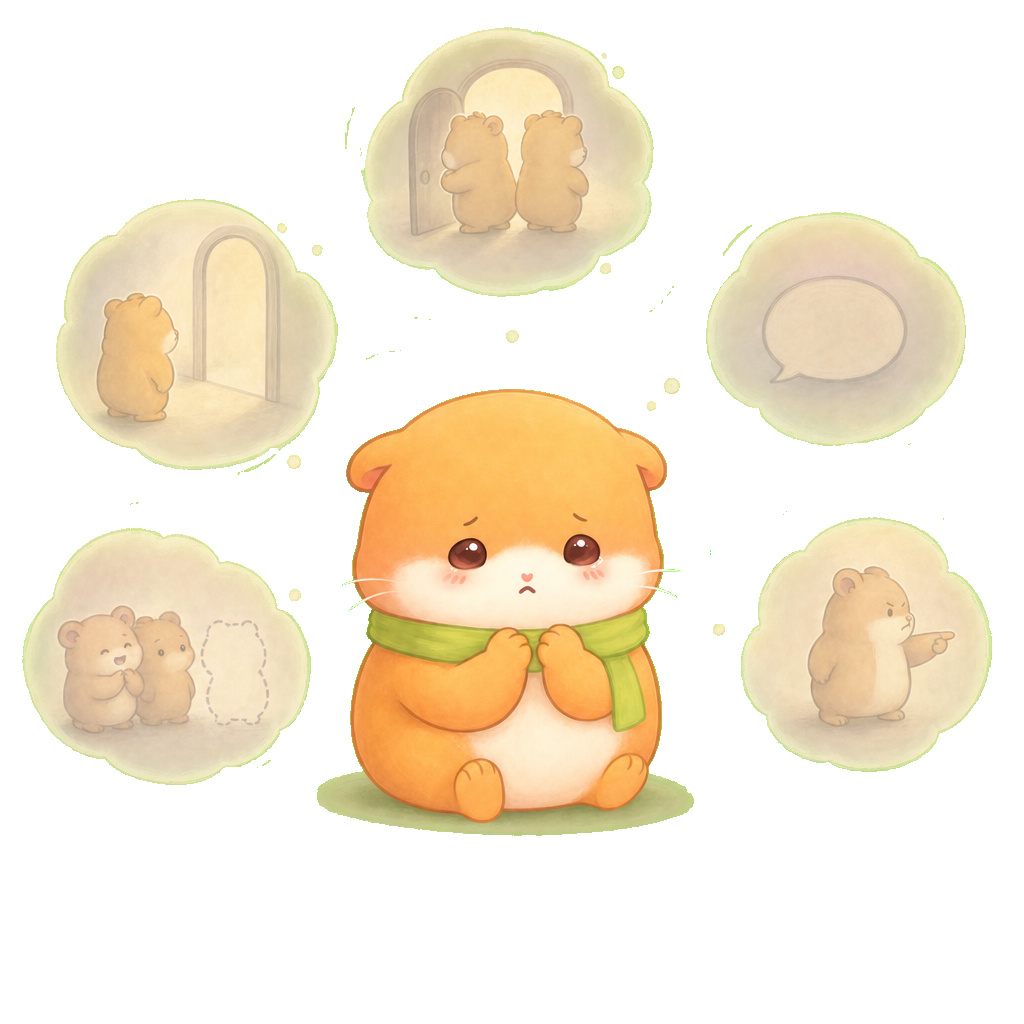
What is it?
Replaying rejection is when your mind keeps returning to moments where you felt unwanted, ignored, criticized, excluded, or not chosen. These moments can stick because social pain is real pain, and the brain treats belonging as important information. But when the replay becomes repetitive, it can start to strengthen the rejection story rather than help you understand what happened. You may find yourself scanning the memory for proof that you’re too much, not enough, embarrassing, forgettable, or unlovable.
How do people work on it?
The first step is to separate the event from the identity story. The event might be: someone didn’t invite you, someone pulled away, someone criticized you, someone didn’t respond how you hoped. The identity story might be: “I’m unwanted,” “I’m always too much,” “No one ever chooses me.” Write both down separately. Then ask: “What else could this mean besides the harshest story about me?”
A useful exercise: use an event vs. story split. On one side, write only observable facts. On the other, write what your mind says it means about you. Then add a third section: other possible meanings. You’re not trying to force yourself into positivity. You’re giving your brain more than one interpretation.
Additional resources to explore: CBT can help with mind-reading, personalization, and fixed self-labeling after rejection. Compassion-focused therapy can help when rejection triggers shame. Attachment-informed therapy may be useful if rejection replay connects to abandonment fear, relational trauma, or repeated anxious attachment patterns.
Educational, not diagnostic.
Learn more