Pursue–withdraw cycle
Personal Patterns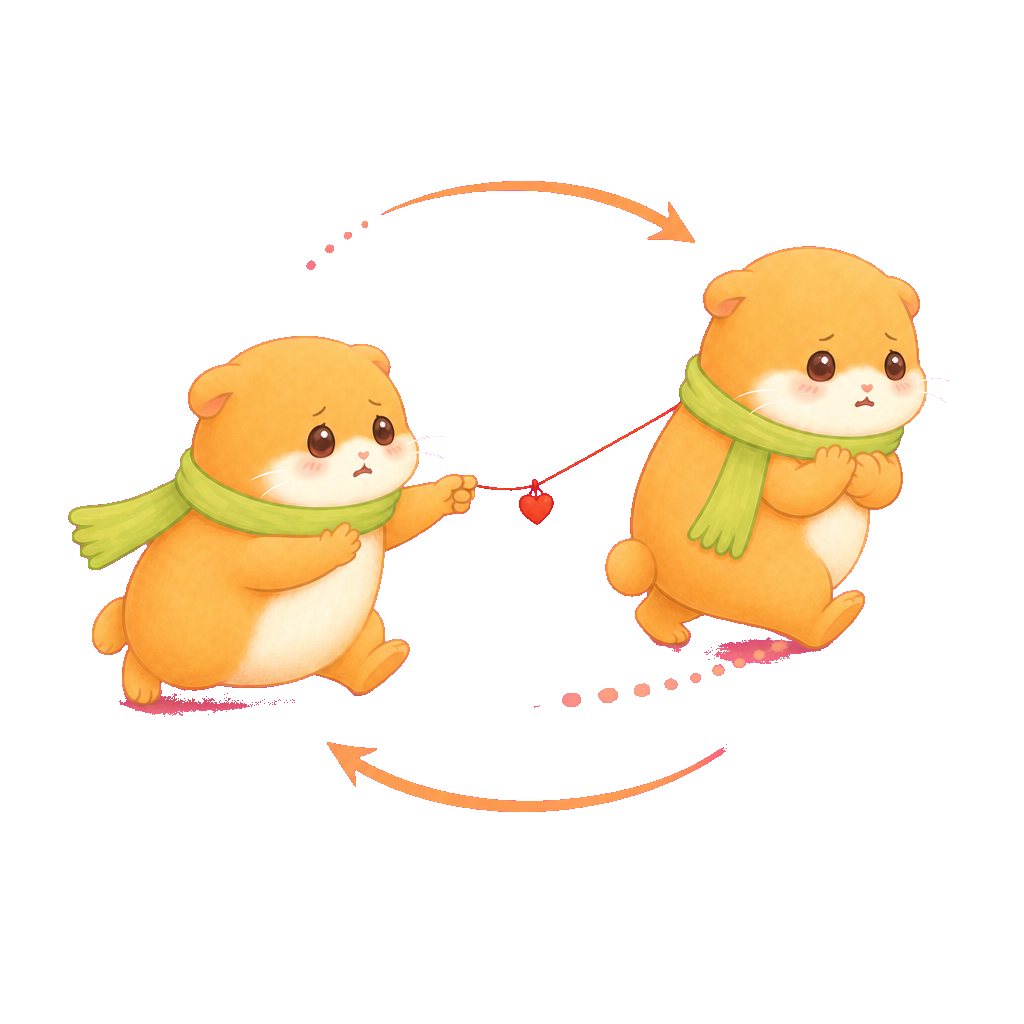
What is it?
The pursue–withdraw cycle happens when one person responds to disconnection by pushing for more contact, clarity, or resolution, while the other responds to pressure by pulling back, shutting down, or needing space. The more one person pursues, the more overwhelmed the other feels; the more one person withdraws, the more abandoned or anxious the pursuer feels. It can look like a fight about texting, chores, tone, money, sex, or timing, but underneath it’s often about safety, closeness, autonomy, and feeling understood. The cycle is the problem, not just either person’s behavior. EFT specifically uses this kind of pattern-tracking to help couples understand how both partners get caught in the same loop.
How do people work on it?
Start by naming the cycle instead of blaming the person. Try saying, “I think we’re in the thing where I push harder and you pull away, and then we both feel worse.” The pursuer can practice softening the approach: one clear request instead of repeated pressure. The withdrawer can practice staying connected while taking space: “I need 30 minutes, and I will come back.” The repair happens when both people help interrupt the loop.
A useful exercise: make a cycle map. Write: When I feel disconnected, I tend to… When you do that, I imagine… Then I react by… The softer thing underneath is… This helps both people see the protective fears underneath the surface behaviors.
Additional resources to explore: Emotionally Focused Therapy can be especially relevant for pursue–withdraw cycles. Gottman-informed couples therapy and DBT interpersonal effectiveness skills can also help couples take space, make clear requests, and return to repair without escalating.
Educational, not diagnostic.
Learn more