Procrastination
Personal Patterns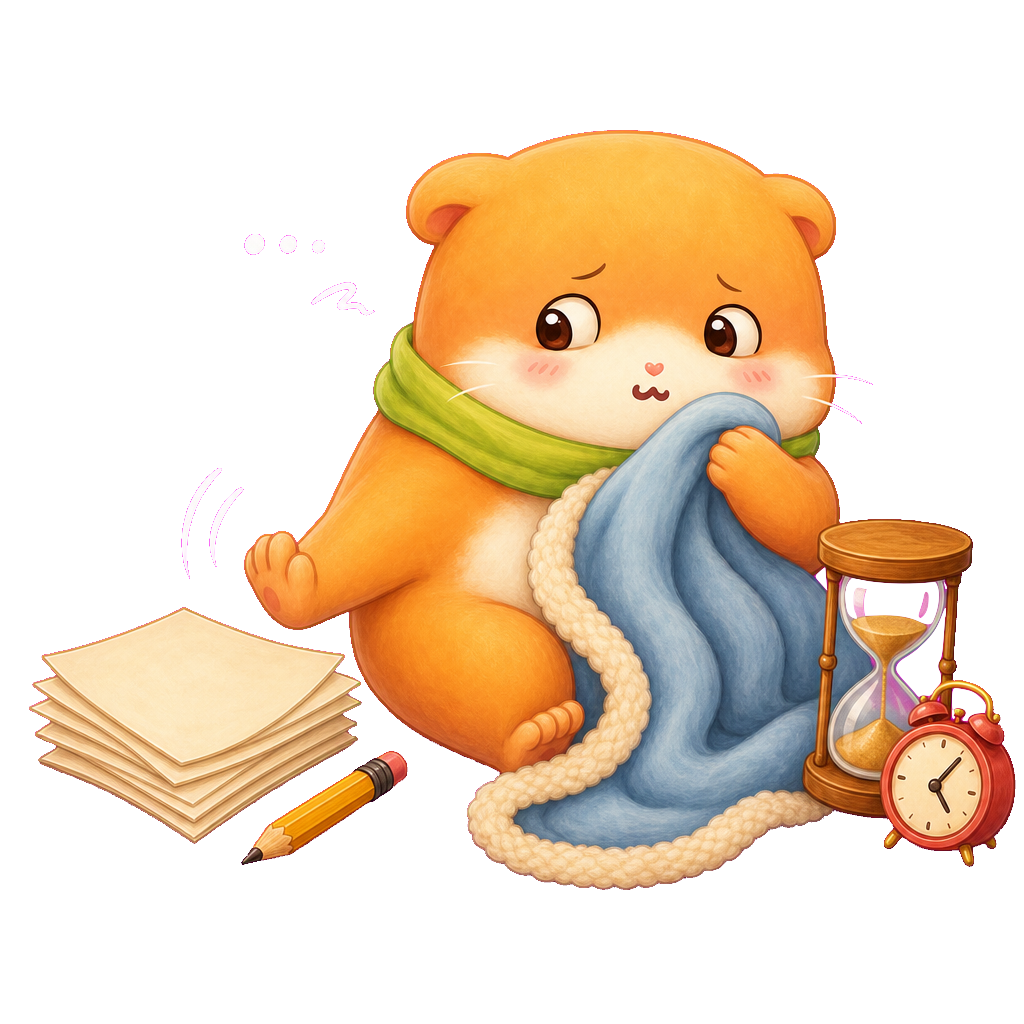
What is it?
Procrastination is often misunderstood as laziness, but it’s usually emotion regulation. You put something off because starting brings up discomfort: boredom, confusion, pressure, fear of failure, resentment, shame, or not knowing where to begin. Avoiding the task gives short-term relief, which reinforces the habit. The problem is that the task usually returns with more pressure attached. Procrastination becomes a loop: discomfort leads to avoidance, avoidance creates consequences, and consequences make the task feel even worse.
How do people work on it?
Don’t start by trying to “feel motivated.” Start by making the task smaller and more concrete. Ask, “What is the next physical action?” Not “work on taxes,” but “open the folder.” Not “write the deck,” but “make a blank document and list three headings.” Then set a tiny timer, like 5 or 10 minutes. The goal is to reduce the emotional barrier to entry. Once you start, momentum has a chance to appear.
A useful exercise: use the five-minute entry. Commit to doing the task for five minutes badly, incompletely, or without finishing. When five minutes ends, you can stop or continue. This works because procrastination often depends on the task feeling too large, too final, or too identity-loaded.
Additional resources to explore: CBT can help with the thoughts that make tasks feel threatening. Behavioral activation can be useful when avoidance is linked to low mood, low reward, or shutdown. Executive function coaching can help if procrastination is driven by task initiation, sequencing, time blindness, or ADHD-related difficulty. Behavioral activation is an evidence-based approach that can reduce inactivity and avoidance by reconnecting people with meaningful or reinforcing activities.
Educational, not diagnostic.
Learn more