Overwhelm withdrawal
Personal Patterns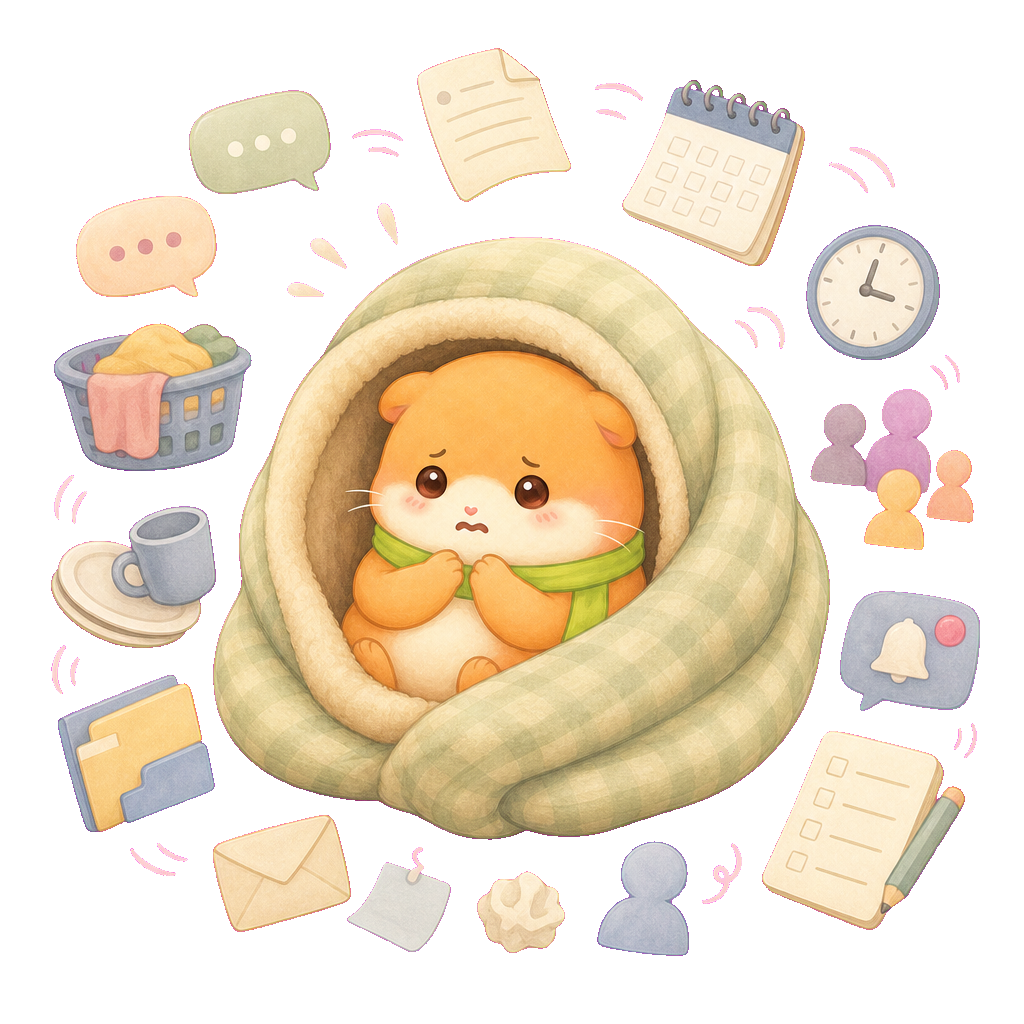
What is it?
Overwhelm withdrawal is when stress gets so high that your system responds by pulling back. You may stop replying, cancel plans, ignore tasks, avoid messages, stay in bed, or drop routines that usually help. This is often a protective response, not a character flaw. The nervous system is trying to reduce demand. But when withdrawal continues, life can become more stressful: responsibilities pile up, relationships feel strained, and re-entry starts to feel harder than the original task.
How do people work on it?
When you’re overwhelmed, don’t try to re-enter everything at once. Pick one re-entry point: one text, one shower, one dish, one email, one 10-minute walk, one calendar check. The goal is to reduce the pressure enough that movement becomes possible again. If people are waiting on you, send a simple bridge message: “I’m overwhelmed and slower to respond, but I haven’t forgotten.” You don’t need a full explanation to reconnect.
A useful exercise: use a minimum viable return. Write down the smallest action that would reopen contact with your life. It should be almost embarrassingly small. Then do only that. Afterward, ask, “Did this make the next step slightly easier?” The point is not catching up immediately; it’s breaking the freeze.
Additional resources to explore: Behavioral activation can help when withdrawal is linked to low mood or shutdown. DBT distress tolerance can help when overwhelm feels physically intense. If withdrawal is tied to burnout, trauma, or depression, structured clinical support may be useful, especially if basic functioning is affected.
Educational, not diagnostic.
Learn more