Overcommitment
Personal Patterns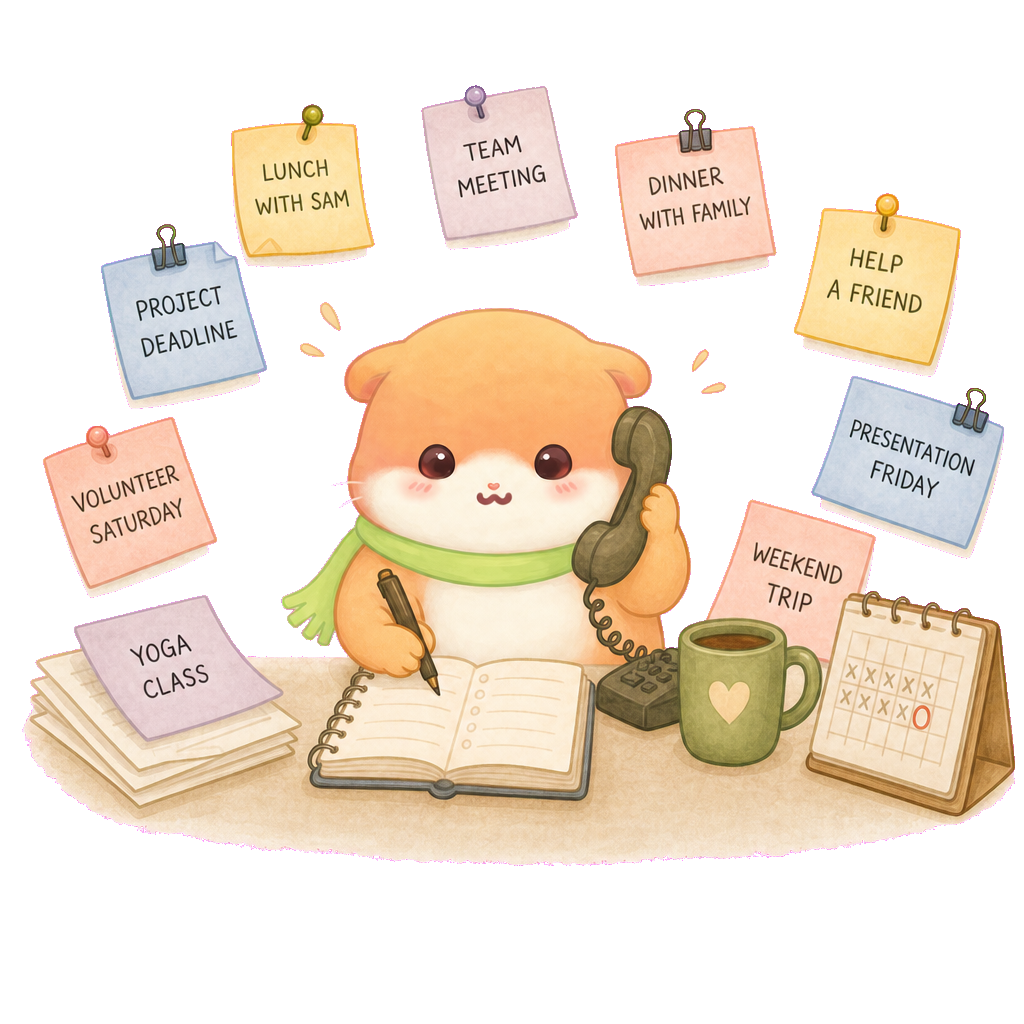
What is it?
Overcommitment is when your yes exceeds your actual capacity. You may agree because you want to be helpful, impressive, responsible, generous, liked, or safe from disappointing someone. The problem is that the commitment may be made in a moment of optimism, guilt, pressure, or high energy, while the actual work has to be done by your real future self. Overcommitment often leads to resentment, rushing, missed follow-through, burnout, or the feeling that life is just one obligation after another.
How do people work on it?
Before saying yes, check capacity before desire. You can want to do something and still not have room for it. Ask: “What will this cost in time, energy, attention, and recovery?” Also ask: “What would I have to move, reduce, or drop to make this realistic?” If you can’t name what comes off the plate, the new commitment probably doesn’t fit.
A useful exercise: use a commitment cost check. Before agreeing, write: time cost, energy cost, emotional cost, deadline, and what this replaces. If you don’t know, your answer can be: “Let me check my week and get back to you.” That pause protects you from making promises from pressure.
Additional resources to explore: DBT interpersonal effectiveness skills can help with saying no, negotiating, and preserving self-respect. ACT can help you choose commitments based on values rather than approval or guilt. Workload coaching or therapy focused on boundaries may help if overcommitment is chronic.
Educational, not diagnostic.
Learn more