Mood reactivity
Personal Patterns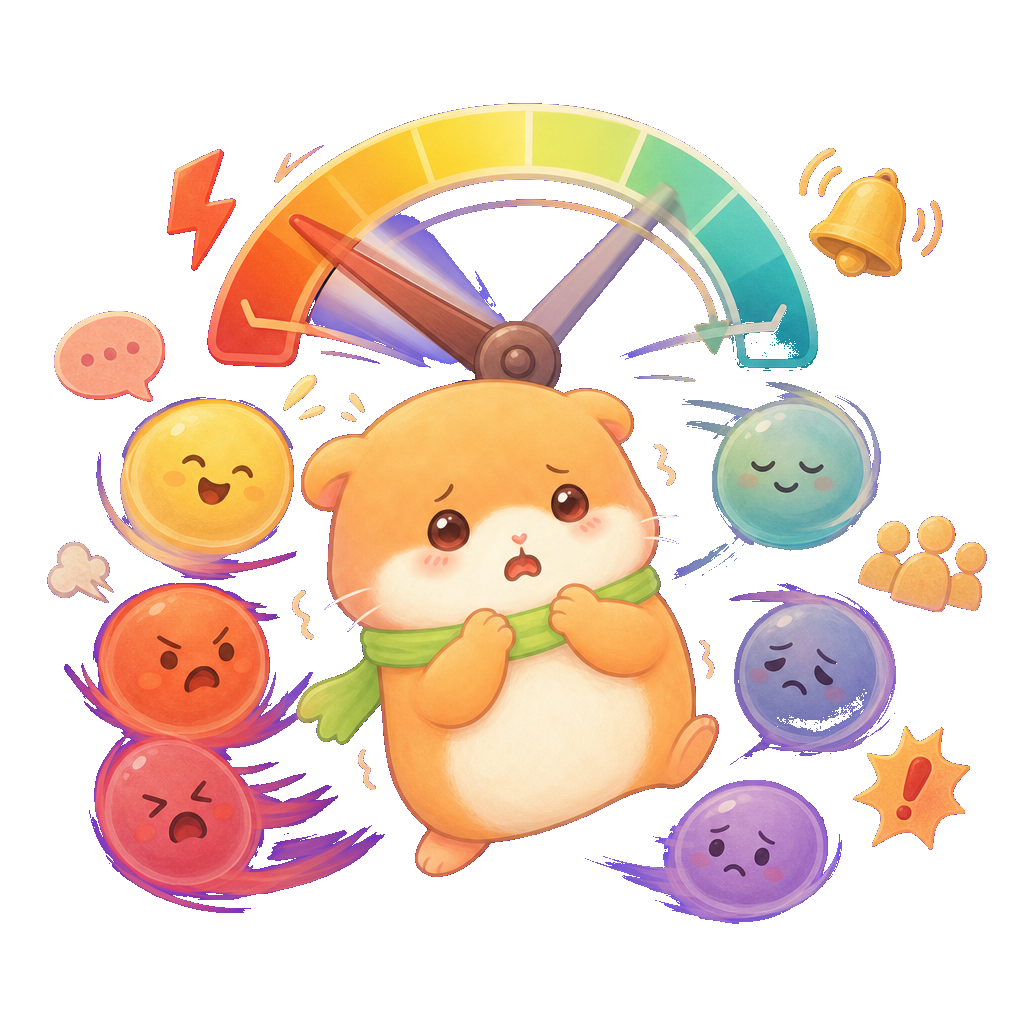
What is it?
Mood reactivity is when your emotional state changes quickly and intensely in response to something external or internal: a text, tone, memory, body sensation, criticism, silence, plan change, social cue, or small disappointment. The shift may feel sudden, but there’s usually a chain: vulnerability factors like poor sleep or stress, then a trigger, then an interpretation, then the emotional wave. Mood reactivity can make you feel like your day, identity, or relationships are constantly at the mercy of small cues.
How do people work on it?
Track the chain, not just the mood. Ask: What made me more vulnerable today? What was the trigger? What did I tell myself it meant? What did I do next? This helps you see where you can intervene. Sometimes the best mood regulation happens earlier: eating, sleeping, reducing overload, setting boundaries, or not checking something that reliably destabilizes you.
A useful exercise: use a mood chain map. Write five links: vulnerability factors → trigger → interpretation → emotion → action urge. Then choose one link you could change next time. For example, you may not control the trigger, but you can change the interpretation, delay the action urge, or reduce vulnerability factors.
Additional resources to explore: DBT emotion regulation can be especially relevant because it teaches people to identify emotion chains and reduce vulnerability to intense emotions. CBT can help with the interpretations that intensify mood shifts. If mood changes are extreme, impairing, or feel outside your control, it may be worth exploring clinical support to rule out broader mood or trauma-related issues.
Educational, not diagnostic.
Learn more