Intention-action gap
Personal Patterns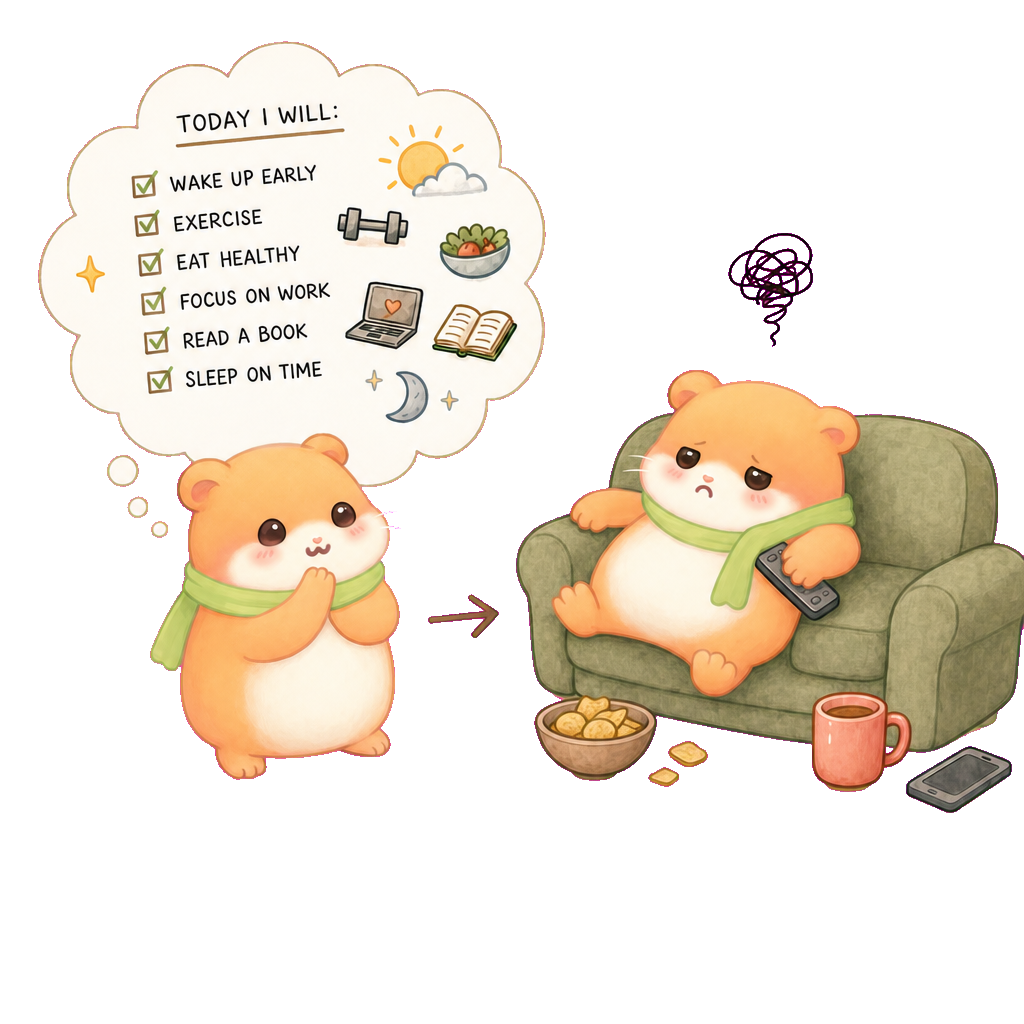
What is it?
The intention-action gap is the space between wanting to do something and actually doing it. You may genuinely intend to exercise, reply, apply, clean, sleep earlier, create, apologize, or start a project, but the action doesn’t happen. This gap can be caused by vague plans, low energy, fear, perfectionism, executive-function difficulty, lack of reward, or emotional resistance. The mistake is assuming intention should automatically create action. Often, action needs structure.
How do people work on it?
Turn intentions into specific, scheduled, visible actions. “I should work on this” is too vague. “At 10:30, I’ll open the document and write three bullet points” is much stronger. Reduce the first step until it feels almost too small. If the plan still isn’t happening, don’t shame yourself; diagnose the friction. Is the task unclear? Too big? Emotionally loaded? Boring? Missing a deadline? Missing support?
A useful exercise: use an implementation plan. Write: When ___, where ___, I will do ___ for ___ minutes. Example: “After coffee, at my desk, I’ll open the email draft and write the subject line for five minutes.” The more concrete the plan, the less your brain has to invent in the moment.
Additional resources to explore: Behavioral activation, CBT, habit design, and executive-function coaching can all help. If the gap is driven by ADHD-like difficulties, supports like timers, reminders, body doubling, and task breakdowns may be more useful than trying to increase willpower.
Educational, not diagnostic.
Learn more