Fixed self-story
Personal Patterns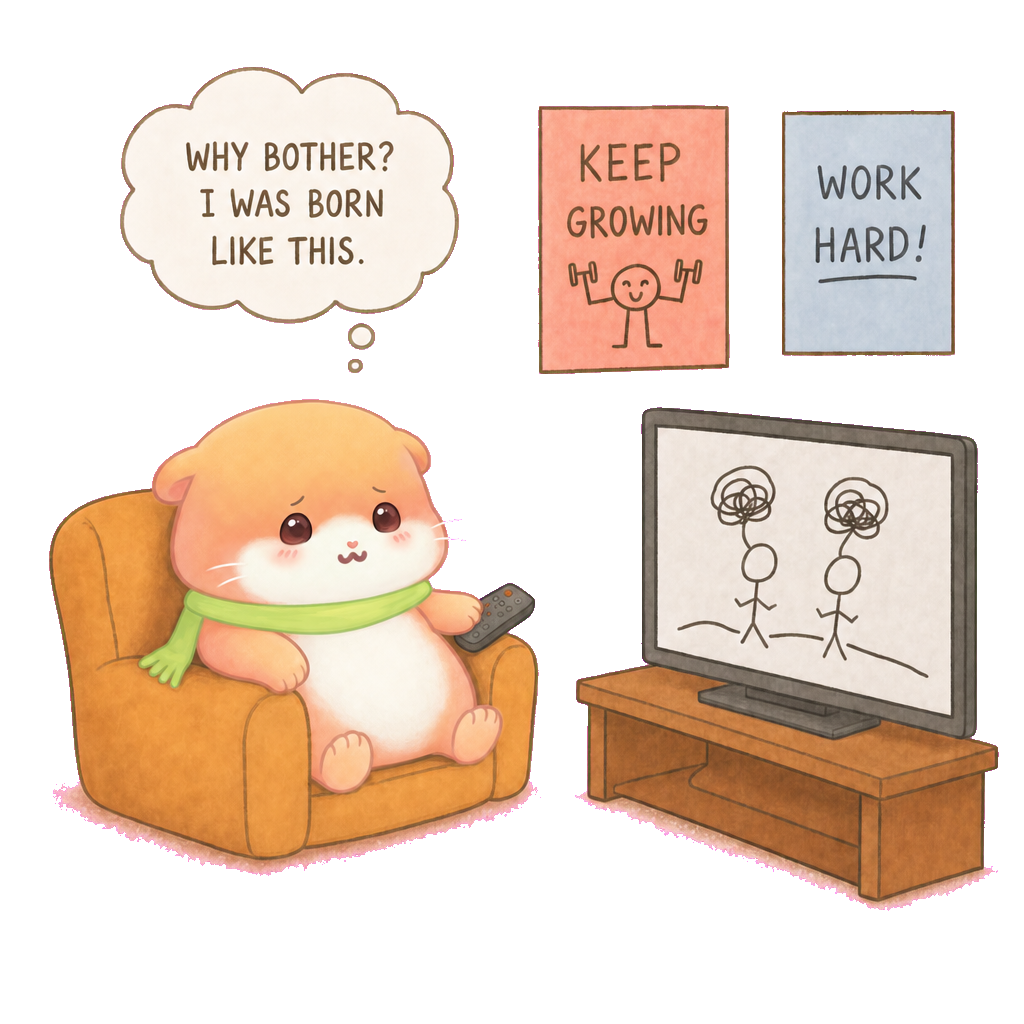
What is it?
A fixed self-story is when you turn repeated experiences, traits, mistakes, or struggles into a rigid identity. You may think, “I’m just lazy,” “I’m bad with people,” “I’m not disciplined,” “I’m always the problem,” or “I’m not the kind of person who can change.” The issue isn’t noticing patterns in yourself. The issue is treating those patterns as permanent truths. Fixed self-stories can feel protective because they make the future predictable, but they also close off experimentation, growth, and self-correction.
How do people work on it?
Replace identity labels with specific behavior language. Instead of “I’m lazy,” try “I avoid tasks when they feel unclear or overwhelming.” Instead of “I’m bad at relationships,” try “I shut down when conflict gets intense.” Specific language creates room for change because behaviors can be understood, supported, and practiced. Identity labels usually just trap you.
A useful exercise: use a story-to-pattern rewrite. Write the fixed self-story, then rewrite it as a pattern with context. Example: “I’m unreliable” becomes “I lose follow-through when tasks don’t have reminders, structure, or a clear next step.” Then write one support that would make the pattern easier to interrupt.
Additional resources to explore: CBT can help challenge rigid self-beliefs and all-or-nothing identity labels. ACT defusion can help you notice self-stories without treating them as facts. Schema therapy may be useful if the self-story feels old, emotionally intense, or connected to early experiences.
Educational, not diagnostic.
Learn more