Failure forecasting
Personal Patterns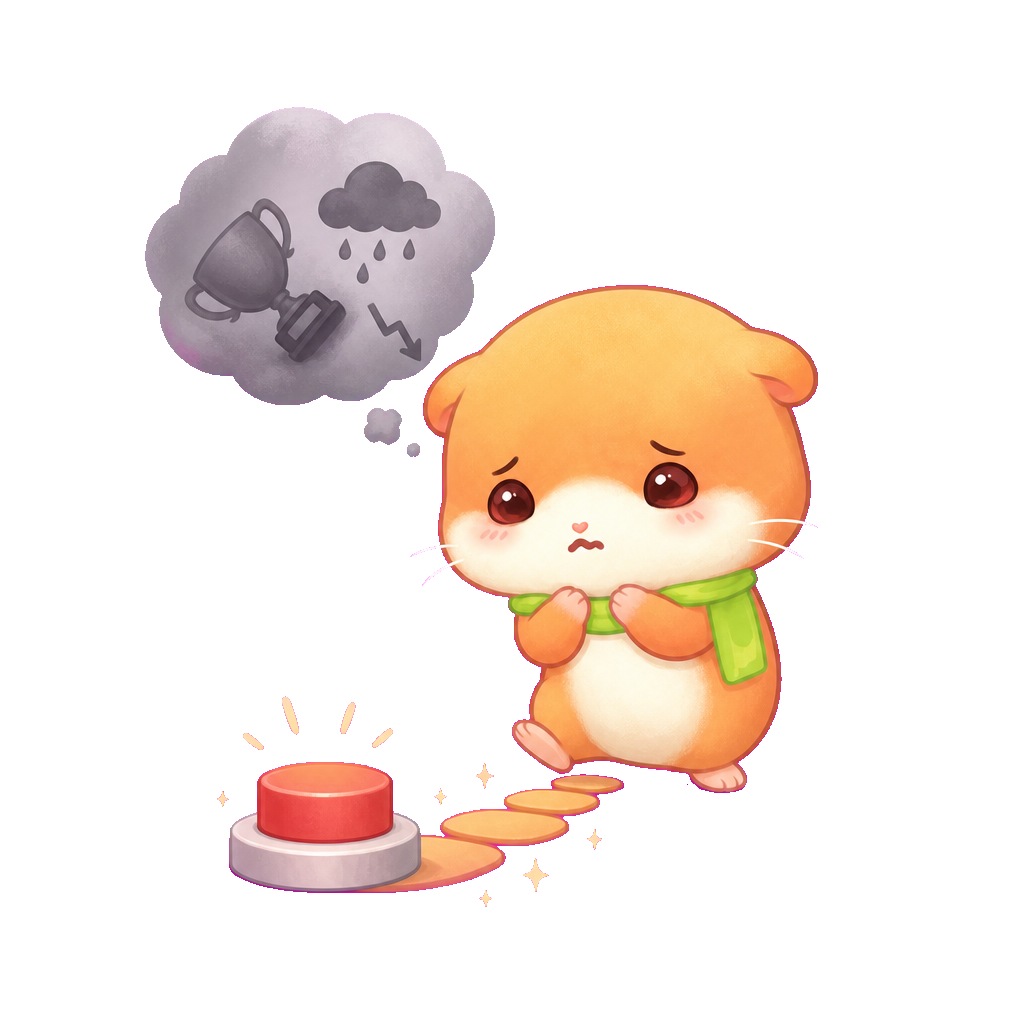
What is it?
Failure forecasting is when your mind predicts that something won’t work before you’ve actually tested it. You may imagine rejection, embarrassment, disappointment, wasted effort, or proof that you’re not capable. The prediction can feel protective: if you expect failure, maybe it won’t hurt as much. But it also reduces effort, risk-taking, practice, and openness to feedback. Over time, the forecast can become self-fulfilling because you stop giving yourself real chances.
How do people work on it?
Treat the failure prediction as a hypothesis, not a fact. Ask, “What exactly am I predicting? What evidence supports it? What evidence complicates it? What would be a small, low-risk test?” You don’t have to guarantee success before trying. You just need enough room to gather new data.
A useful exercise: use a prediction test. Before taking action, write your prediction: “If I do this, ___ will happen.” Then take a small version of the action and record what actually happened. Even if the result isn’t perfect, compare it to the forecast. The goal is to weaken the brain’s habit of treating fear as proof.
Additional resources to explore: CBT can help with catastrophic predictions, negative filtering, and overgeneralizing from past failures. ACT can help you take meaningful risks while fear is present. Self-compassion can help if the possibility of failure feels shameful rather than simply disappointing.
Educational, not diagnostic.
Learn more