Emotion suppression
Personal Patterns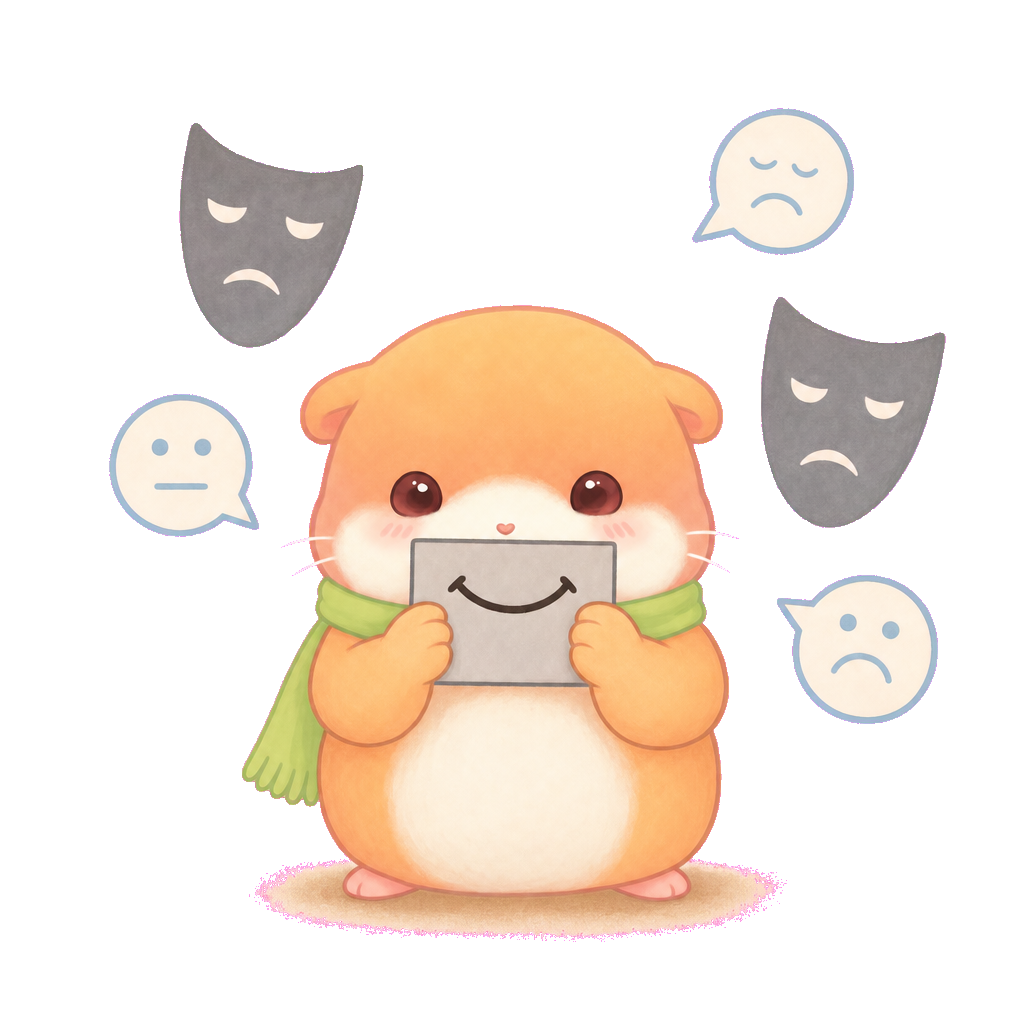
What is it?
Emotion suppression is when you try to push feelings out of awareness or keep them from showing. It can look like saying “I’m fine,” staying busy, going numb, changing the subject, minimizing, or keeping your face and voice controlled while something inside is activated. Suppression can be useful in short bursts, like staying composed during a meeting or crisis, but it becomes a pattern when emotions are never given space afterward. Feelings that are repeatedly suppressed often come back as tension, irritability, anxiety, shutdown, resentment, or sudden emotional release.
How do people work on it?
The goal isn’t to express every feeling immediately, but to create a place where the feeling can be acknowledged instead of buried. Start by naming the emotion privately: “I’m angry,” “I’m hurt,” “I’m embarrassed,” “I’m scared.” Then ask whether it needs expression, action, care, or simply time. If expressing the feeling directly feels too hard, write it down first or say it in one sentence to someone safe. Suppression usually softens when the emotion has somewhere to go.
A useful exercise: try a two-minute emotion check. Set a timer and complete three prompts: I’m feeling… It makes sense because… What this feeling may need is… You don’t have to fix the feeling. You’re practicing letting it exist clearly enough to understand it.
Additional resources to explore: DBT emotion regulation skills can help with naming emotions and understanding what they’re trying to communicate. ACT can help with making room for feelings instead of fighting them. Emotion-focused therapy or somatic therapy may be useful if you tend to disconnect from emotions or only feel them once they become overwhelming.
Educational, not diagnostic.
Learn more