Distraction numbing
Personal Patterns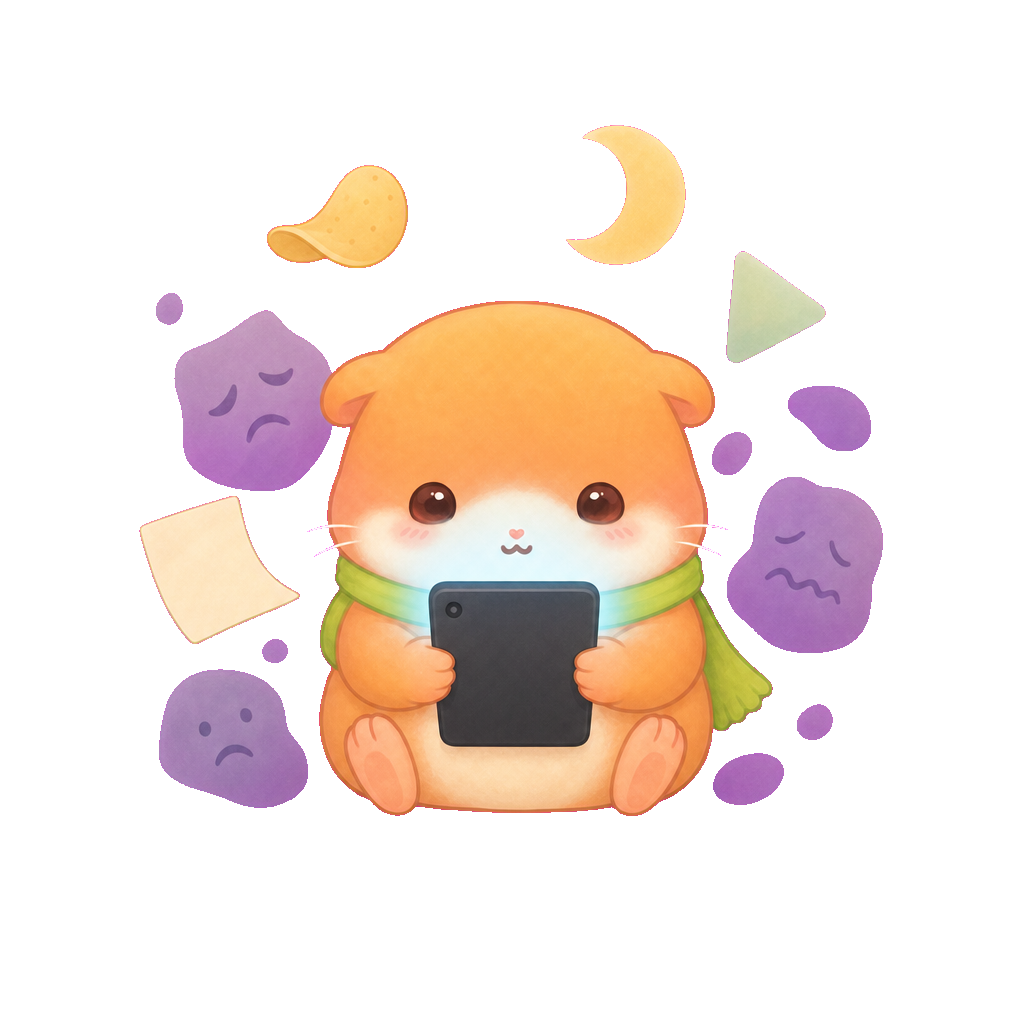
What is it?
Distraction numbing is when you use input, activity, or stimulation to avoid being alone with a feeling. It can look like scrolling, overeating, overworking, sleeping too much, streaming constantly, drinking, shopping, gaming, or jumping from one thing to another. Distraction isn’t bad by itself; sometimes it’s healthy to take a break. It becomes numbing when the goal is to not feel, not know, not decide, or not face something. The problem is that numbing usually lowers discomfort temporarily while leaving the original feeling or situation untouched.
How do people work on it?
The goal isn’t to remove every distraction. It’s to put a pause between the feeling and the numbing behavior. Before you reach for the distraction, ask, “What am I trying not to feel or face?” Then choose intentionally: do you need a regulated break, or are you disappearing from something important? If you do choose distraction, give it a container: 20 minutes, one episode, one walk, one meal, not an indefinite escape.
A useful exercise: try a pause before numbing. Before the behavior, take 60 seconds and write: I feel ___. I want to avoid ___. A caring next step would be ___. Then decide what to do. This doesn’t demand perfect self-control; it turns an automatic escape into a conscious choice.
Additional resources to explore: ACT can help you notice urges without immediately obeying them. DBT distress tolerance skills can help if you need alternatives for getting through intense feelings safely. If substances, eating behaviors, spending, or sleep are causing harm or feel hard to control, specialized support may be important.
Educational, not diagnostic.
Learn more