Deadline dependence
Personal Patterns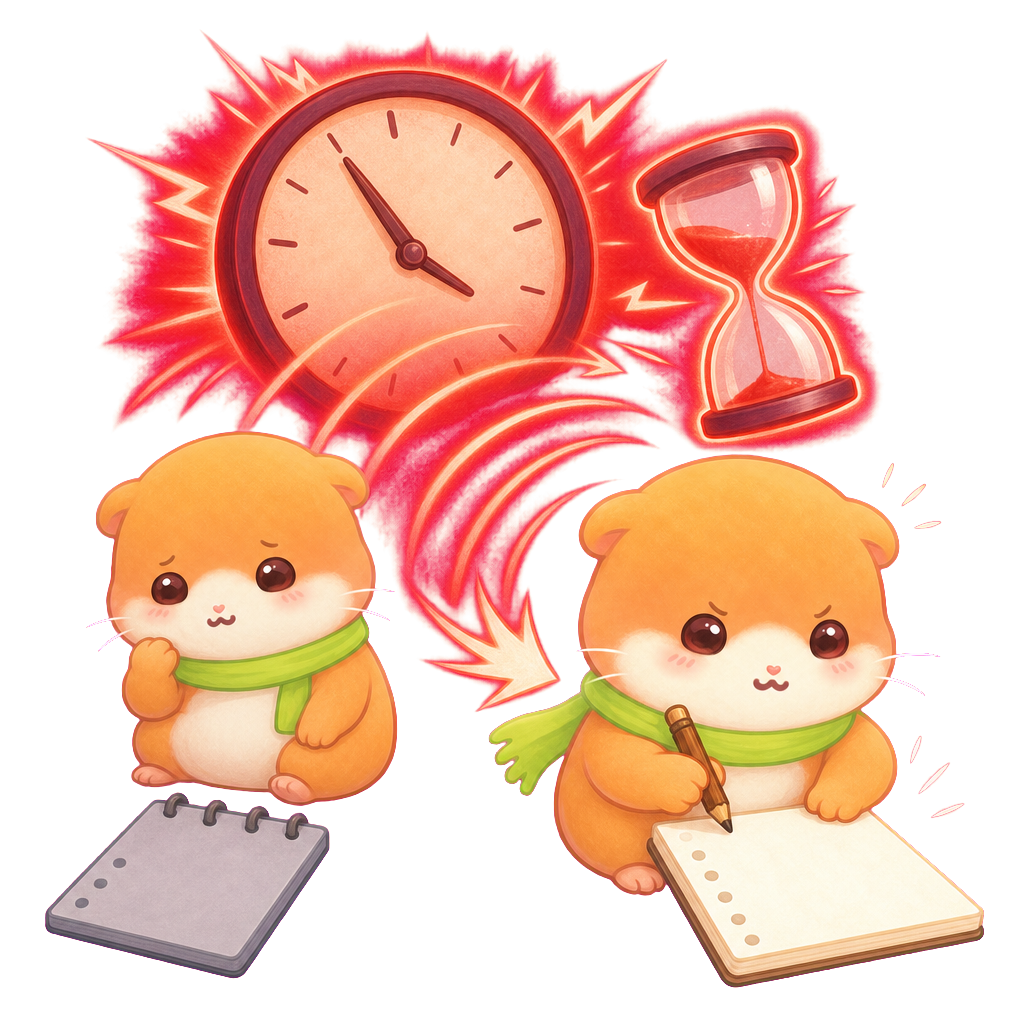
What is it?
Deadline dependence is when your brain struggles to activate until pressure becomes real. You may know about a task for days or weeks, but only feel able to focus when the deadline is close, consequences are visible, or panic kicks in. This can produce bursts of productivity, but it’s exhausting and risky. The pattern works just enough to keep repeating, while quietly reinforcing the belief that you can only function under stress.
How do people work on it?
Create artificial urgency before the real deadline. Break the task into smaller deadlines with visible consequences or accountability: send a draft to someone, book a work session, schedule a check-in, or set a “decision by” time. Make the earlier milestone concrete enough that your brain can respond to it. You’re not trying to eliminate urgency; you’re moving it earlier and making it less destructive.
A useful exercise: use a deadline ladder. For any real deadline, create three earlier mini-deadlines: start by, rough version by, and final review by. Add accountability to at least one of them. If nobody else is involved, use a timer, calendar alert, body double, or scheduled send time.
Additional resources to explore: ADHD coaching, CBT for adult ADHD, and organizational-skills training can help build external accountability, planning systems, and realistic deadlines. Practical time-management supports like reminders, alarms, to-do lists, and calendar systems are commonly used to support time management and follow-through.
Educational, not diagnostic.
Learn more