Catastrophizing
Personal Patterns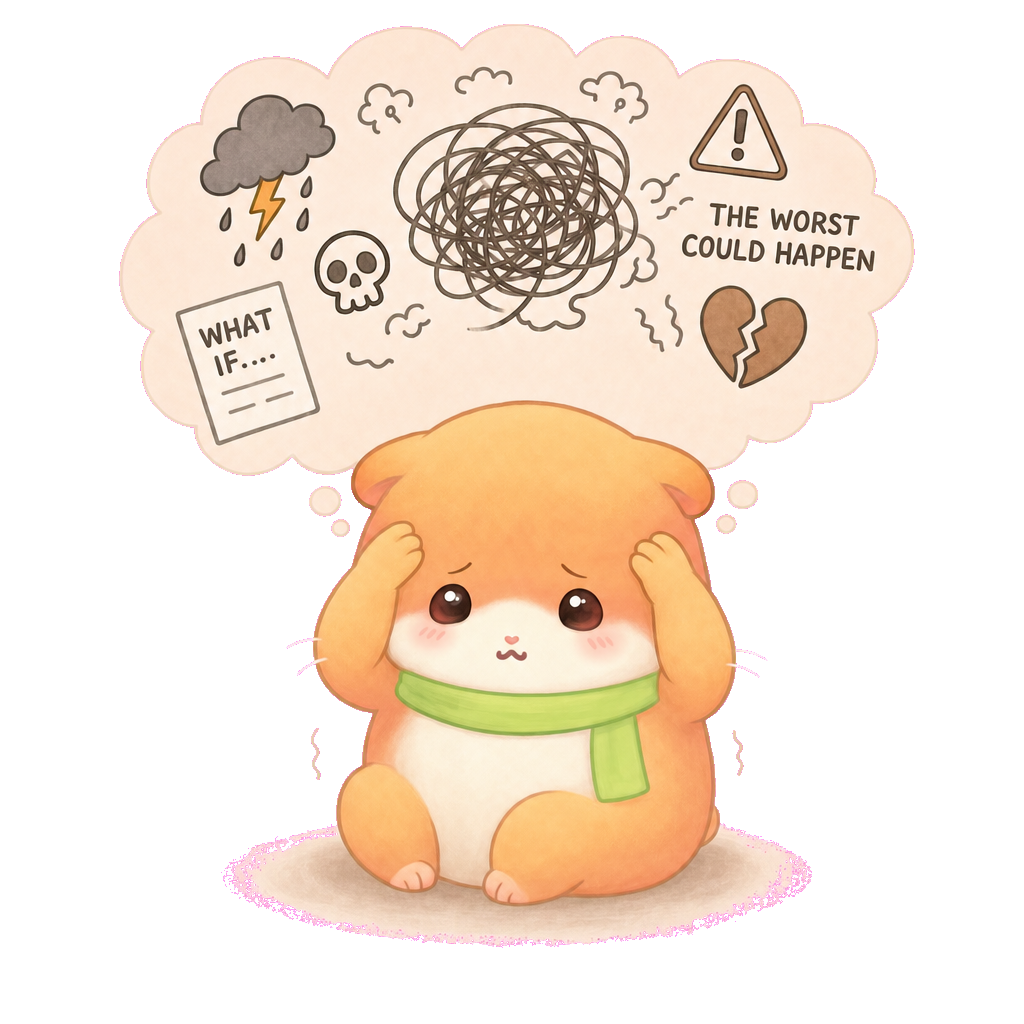
What is it?
Catastrophizing happens when the mind jumps from a problem or unknown to the worst possible outcome. A small mistake becomes “everything is ruined,” a delayed reply becomes “they hate me,” or one bad day becomes “my life is falling apart.” The brain does this to prepare for danger, but it often treats possibility as probability. This pattern can make you feel like you’re being realistic, when actually your attention has narrowed around the most threatening version of events.
How do people work on it?
For catastrophizing, the core skill is learning to slow down the leap from possible to probable. The mind may be showing you the worst-case scenario to protect you, but that doesn’t mean the worst case is the most accurate prediction. A practical exercise is the three-outcome method: write the worst-case outcome, the best-case outcome, and the most realistic outcome. Then write what you would actually do if the difficult outcome happened. This matters because catastrophizing often includes a hidden belief that “if this happens, I won’t be able to cope.” The goal is not fake positivity. The goal is to restore proportion.
A useful exercise: ask, “What is the actual evidence this will happen?” “What evidence points another way?” “If this did happen, what would my first three steps be?” This moves the brain from threat simulation into coping planning.
Additional resources to explore: CBT cognitive restructuring can be especially relevant here because it targets exaggerated threat predictions and helps test whether the thought is accurate, useful, or distorted.
Educational, not diagnostic.
Learn more