Boom-bust cycling
Personal Patterns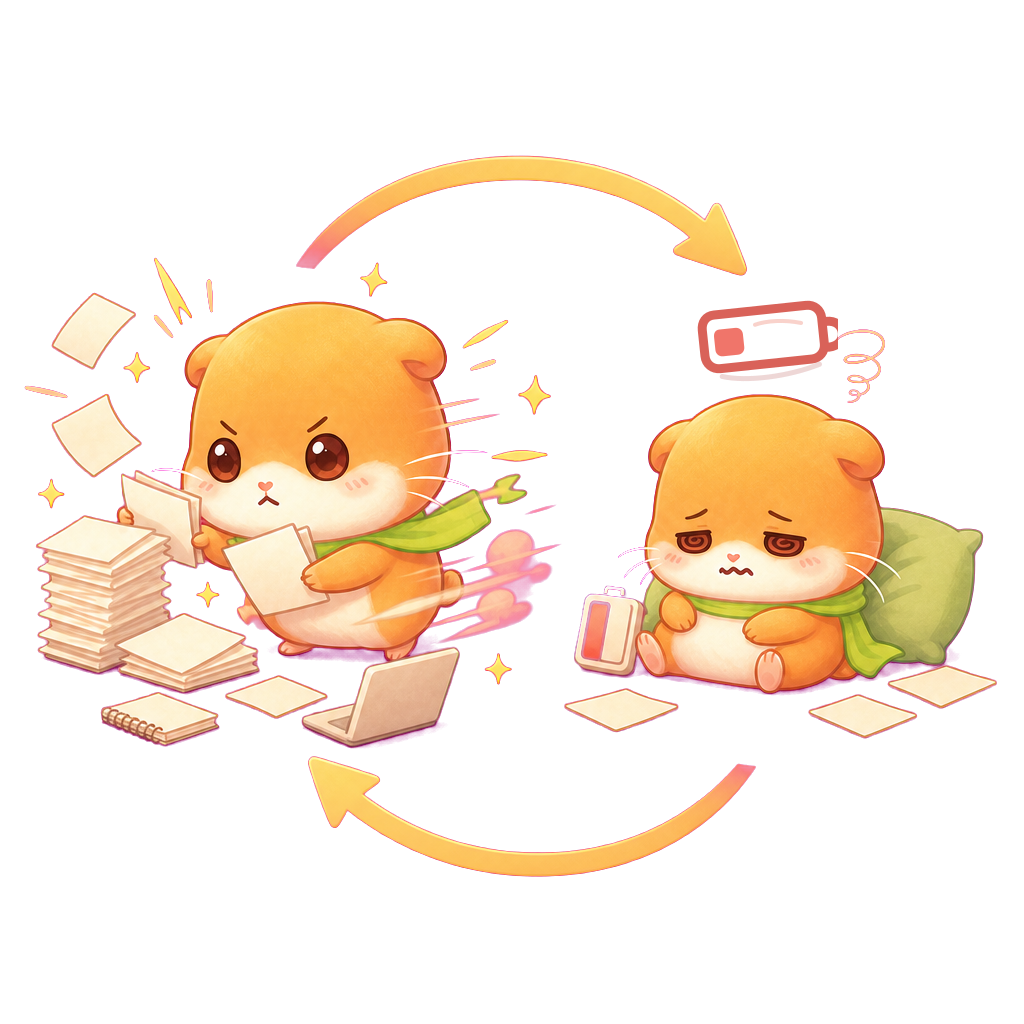
What is it?
Boom-bust cycling is when you push hard during a high-energy window, then crash afterward. You might have a productive day where you answer everything, clean everything, say yes to everything, or work for hours without stopping, followed by a day where you can barely function. The “boom” can feel like catching up, but it often borrows energy from the future. Over time, the cycle makes your capacity harder to predict because your system never gets a steady rhythm of effort and recovery.
How do people work on it?
The goal is to build sustainable output, not maximum output. On a high-energy day, practice stopping before you’re completely depleted. Set an upper limit on effort, even if you feel like you could keep going. This is counterintuitive, but it teaches your system that productivity doesn’t have to mean draining yourself. The question becomes: “What pace could I repeat tomorrow?” not “How much can I squeeze out today?”
A useful exercise: use an energy budget. At the start of the day, give yourself 10 energy points. Estimate what each task costs before doing it. Keep 1 or 2 points unspent if possible. Afterward, note whether your estimates were accurate. This helps you learn your real capacity instead of planning from adrenaline.
Additional resources to explore: Activity pacing can be especially relevant here. Pacing is more than “taking breaks”; it includes planning and adjusting activities to reduce overexertion and create a more sustainable activity pattern.
Educational, not diagnostic.
Learn more